Septic FAQ
Septic Questions, Answered Straight
The stuff homeowners actually ask us — no jargon, no upsell.
How often should I pump my septic tank?
For most homes, every 3 to 5 years. It depends on tank size and how many people live there — a big family on a smaller tank may need it every 2 to 3 years, while a couple on a larger tank can stretch closer to 5. If it's been longer than that, or you can't remember the last time, it's worth a pump and a quick look.
What are the warning signs of a failing septic system?
Watch for slow drains throughout the house, gurgling in the pipes, sewage smells inside or in the yard, and wet, spongy, or unusually green patches over the drainfield. Backups into the home are the most urgent — if that's happening, call us right away.
How much does septic pumping cost?
Most single-tank pumps in our area run about $400 to $650. Two tanks run roughly $800 to $1,300. A buried lid, a long hose run, or a tank that's years overdue can push it higher. These are rough ranges — you get an exact quote before any work, with no surprise fees. A routine pump is far cheaper than the drainfield repair you'll face if you skip it too long.
I have two septic tanks. Do both need pumping?
Usually, yes. Many older and larger homes have two tanks, or one tank with two compartments. Solids build up in both, so pump them on the same visit to save a second trip. Tell us about both tanks when you call so the crew brings enough capacity.
My septic lid collapsed. What should I do?
Keep kids and pets away first — an open or broken lid is a real fall hazard. Old concrete "coffin" lids crack and cave in with age. The fix is a new lid, usually with a riser that brings access up to ground level so future pumping is quick. Expect roughly $500 to $2,000, depending on how deep the tank sits and how easy it is to reach.
Gravel or dirt fell into my tank. Can it be removed?
Usually, yes. A pump truck can vacuum out most gravel and soil along with the sludge. Heavy debris can take extra time, so mention it when you book.
What if machinery can't reach my tank?
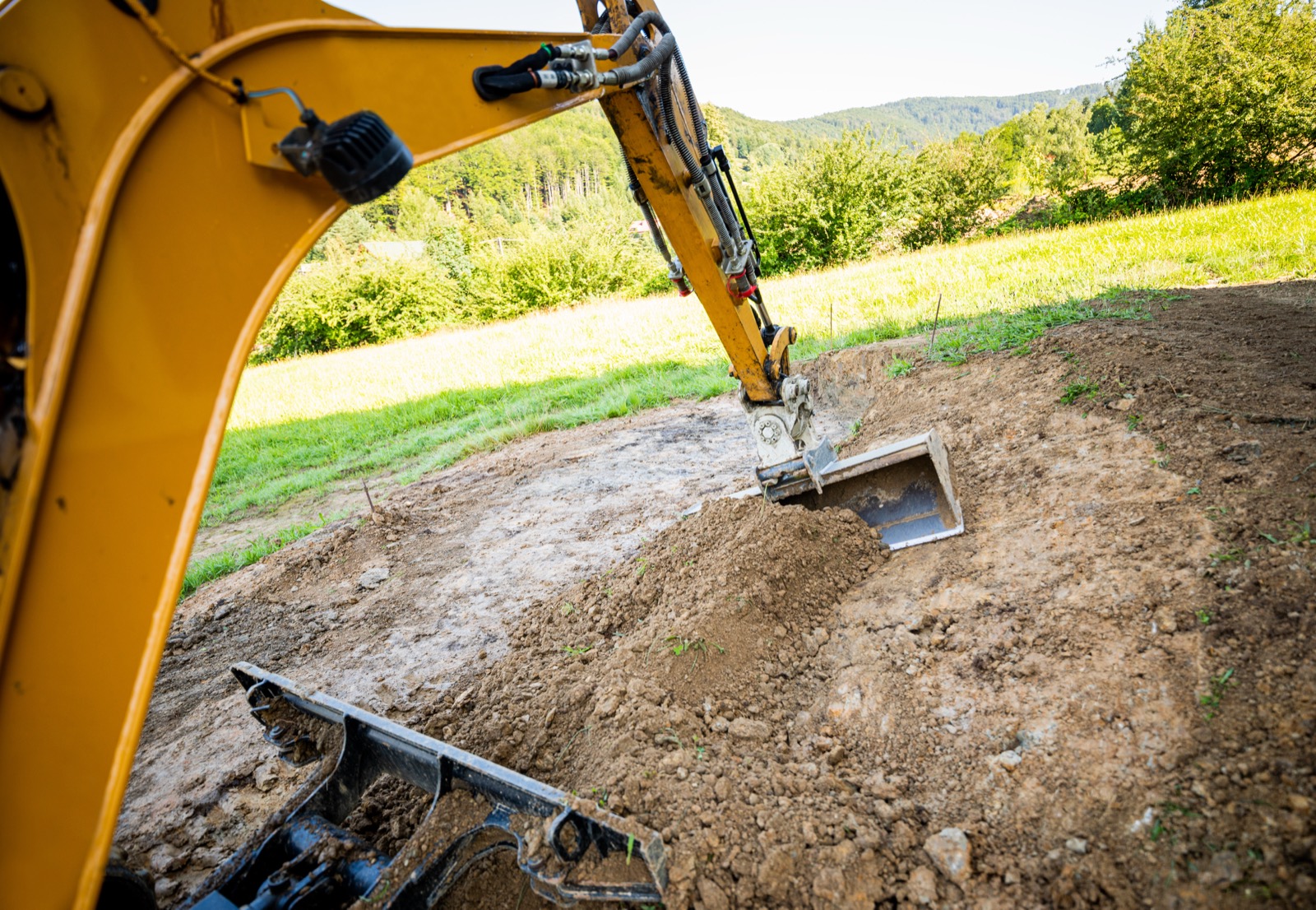
That's common in backyards, and it's rarely a dealbreaker. Pump truck hoses run a long way, so the truck can park in the driveway or on the street. Lid and riser work can often be done by hand digging, and modern plastic lids and risers are light enough to set by hand. Tell us about the access when you call, and we'll plan around it.
I don't know where my leach field is. How do I find it?
Start with your county health department. Septic permits often include a site drawing that shows the tank and drainfield. Wasatch, Summit, Salt Lake, and Utah County all keep these records. If there's nothing on file, a tech can locate the lines with a probe or a camera, typically about $250 to $500. An inspection then tells you what condition the field is in.
What does a septic inspection include?
We locate and open the tank (pumping it if needed), check the tank, baffles, and lids for cracks or failure, evaluate the drainfield and system flow, and give you a written report with a clear pass/fail and any repairs needed.
Do I need a septic inspection to sell my home?
In Summit County, yes — a property on a private septic system has to have its system inspected when it changes ownership. Even where it isn't required, a point-of-sale inspection protects your closing from a five-figure surprise. We turn these around fast and give you documentation you can hand to your agent, buyer, or the county. See our home-sale inspection page.
Can you pump the tank during the home-sale inspection?
Yes, and it's the smart way to do it. The inspector needs to see the tank walls and baffles, which means an empty tank, so pumping often happens during the inspection anyway. Doing both in one visit typically runs about $800 to $1,300. Tell us your closing date when you call.
Do you service my area?
We cover the Wasatch Back (Wasatch & Summit County) plus the septic communities of Salt Lake and Utah County. Check your county — Wasatch, Summit, Utah, or Salt Lake — or just call (435) 246-0247 and we'll confirm.
Can I just flush septic treatment additives instead of pumping?
No. Additives don't remove the solids that build up in your tank — only pumping does. Skipping pumping in favor of additives is one of the most common ways homeowners end up with a failed drainfield.